


The Gateway of India was built to commemorate the visit of the King George V and Queen Mary to Mumbai in 1911 AD. The foundation stone was laid on 31st March 1911 AD. The splendid gateway was designed by George Wittet and his design was sanctioned in August 1911 AD. It is built in the Indo-saracenic style integrating local style of architecture also and adoptingfrom the Muslims of Gujarat. Between 1915 AD and 1919 AD, the work proceeded on reclamations at Apollo Pier for the land on which the gateway and the new sea wall would be built. The foundations were completed in 1920.
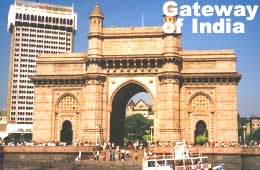
The gateway was built of yellow kharodi basalt and reiforced concrete. The cost of the construction of the gateway came to about Rupes 21,0000, which was given mainly by the government. The approach road was never built due to scarcity of funds and the gateway now stands at an angle to the road leading up to it. The whole seaport front was realigned so that it comes in line with designed promenade, which would sweep down to the middle of the town. The height of the central dome is 48 ft in diameter and rises 83 ft above the ground at its highest point. The has four turets and decorated with intricate lattice work carved into the yellow basalt stone.
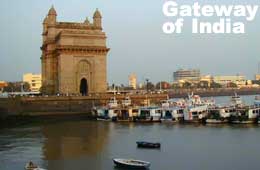
In the past Gateway of India used to be the arrival point for visitors from the west. Ironically, when the Raj ended in 1947, this colonial symbol also became a sort of epitaph: the last of the British ships that set sail for England left from the Gateway. Today this symbol of colonialism has got Indianised, drawing droves of local tourists and citizens. This landmark of Mumbai is a must visit of the city.
The Gateway faces the vast Arabian Sea, flanked by Mumbai's another attraction, Marine Drive, a road running parallel to the sea. The majestic monument is a must-visit at night, in its pristine glory against the backdrop of the sea. It is visited by millions of people across the world every year and is a very significant figure in the lives of the people of Mumbai, as the Gateway defines the grandeur of the city that is a culmination of both, historic and modern cultural environment.The Gateway of India ranks among the most popular tourist attractions in Mumbai. It is located on the banks of the Arabian Sea is the southern waterfront of the city. The gateway is made of basalt and is 26 meters high. Due to its gigantic height, travelers can see the monument from a distance. The harbor is also close by.
The Gateway of India in Mumbai was made to celebrate the visit of King George V and Queen Mary to Bombay, the former name of Mumbai. The monument was designed by an architect named George Wittet and it took around 4 years to complete. The entire monument is made with yellow basalt and concrete and is designed according to the Indo-Saracenic style of architecture. Features of Muslim architectural styles can also be found in the monument. The top of the monument consists of a central dome, which has a diameter of 15 m and is adorned with carvings.
The harbor adjacent had to be completely restructures to allow the construction of the Gateway of India. Made in the early 20th century, it took an enormous amount of 21 lakh rupees to complete the monument. The construction work of the monument was undertaken by Gammon India Limited.

The first major occasion to take place at the Gateway of India was when the First Battalion of the Somerset Light Infantry passed through it. They were the last British troops to leave after India became independent. The ceremony was conducted on 28th February in the year 1948.


1 comments:
Post a Comment